Copy mode
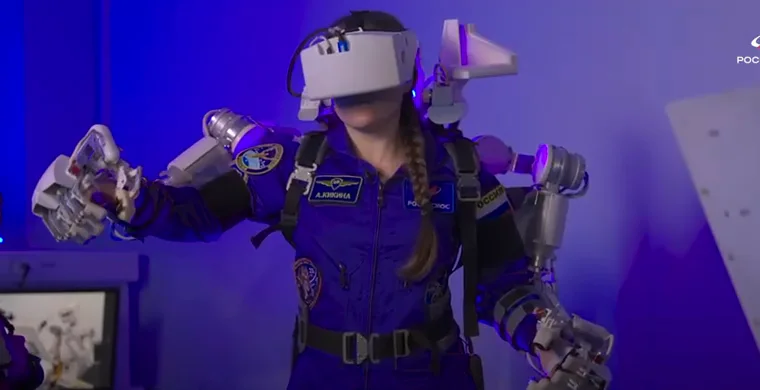
A cosmonaut puts on a control suit with arm guards and gloves. Every move they make, the robot makes too.
It launched on Nov 24 aboard the Progress MS-36 cargo ship. Next stop: the International Space Station.
Positions are worked out from the latest US Space Force tracking data. Drag to spin the Earth, scroll or pinch to zoom.
Roscosmos footage from Star City, with an English voice-over.
A cosmonaut puts on a control suit with arm guards and gloves. Every move they make, the robot makes too.
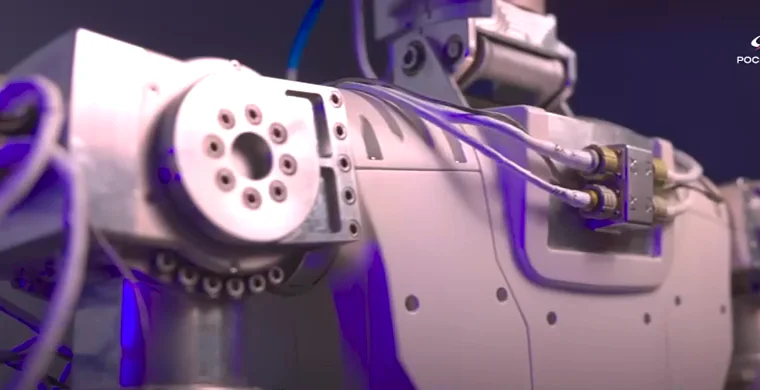
The team loads a set of tasks, and Teledroid carries them out on its own.
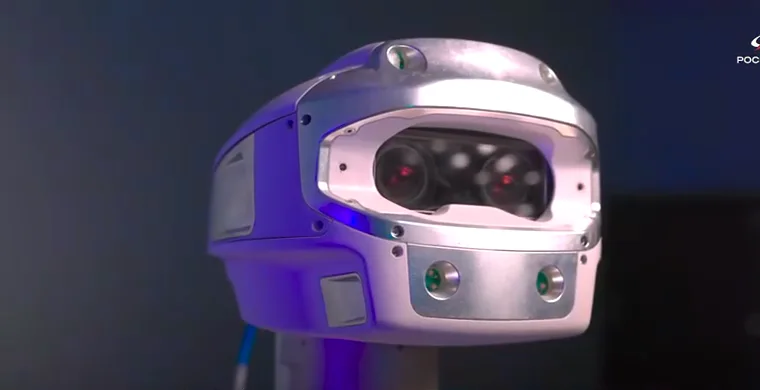
Say "pick up the hammer." Teledroid works out which tool is the hammer, plans how to move its arm, and grabs it by itself.
Progress MS-35 carries the cosmonaut's control suit and its computer to the station.
Progress MS-35 docks. The crew sets up the control station and trains with a virtual robot.
A Soyuz-2.1b rocket lifts off from Baikonur with Progress MS-36 and more than 2.4 tonnes of cargo, Teledroid included.
Progress MS-36 docks with the International Space Station on its own after a two-day flight.
Cosmonauts unpack Teledroid and put it through its first runs inside the ISS, in copy mode, automatic mode and by voice.
On a spacewalk, cosmonauts Pyotr Dubrov and Anna Kikina carry Teledroid out and mount it on the outside of the Nauka module, with a camera pointed at it.
Teledroid goes out into open space, outside the International Space Station. It will be the first humanoid robot ever to do a spacewalk.
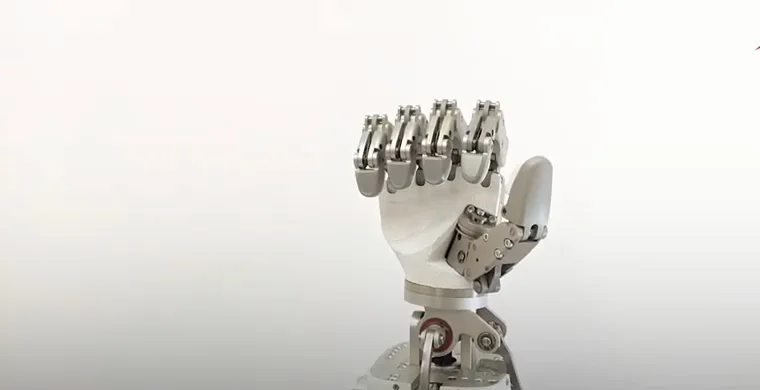
Spacewalks are the most dangerous job in orbit. People spend hours outside the station in a suit, in open space. Teledroid is built to do that work instead, and no humanoid robot has ever done a spacewalk before. NASA's Robonaut and Russia's own FEDOR flew to the ISS but never left the inside of the station. If Teledroid works, Roscosmos says robots like it could become standard crew on Russia's next station.